

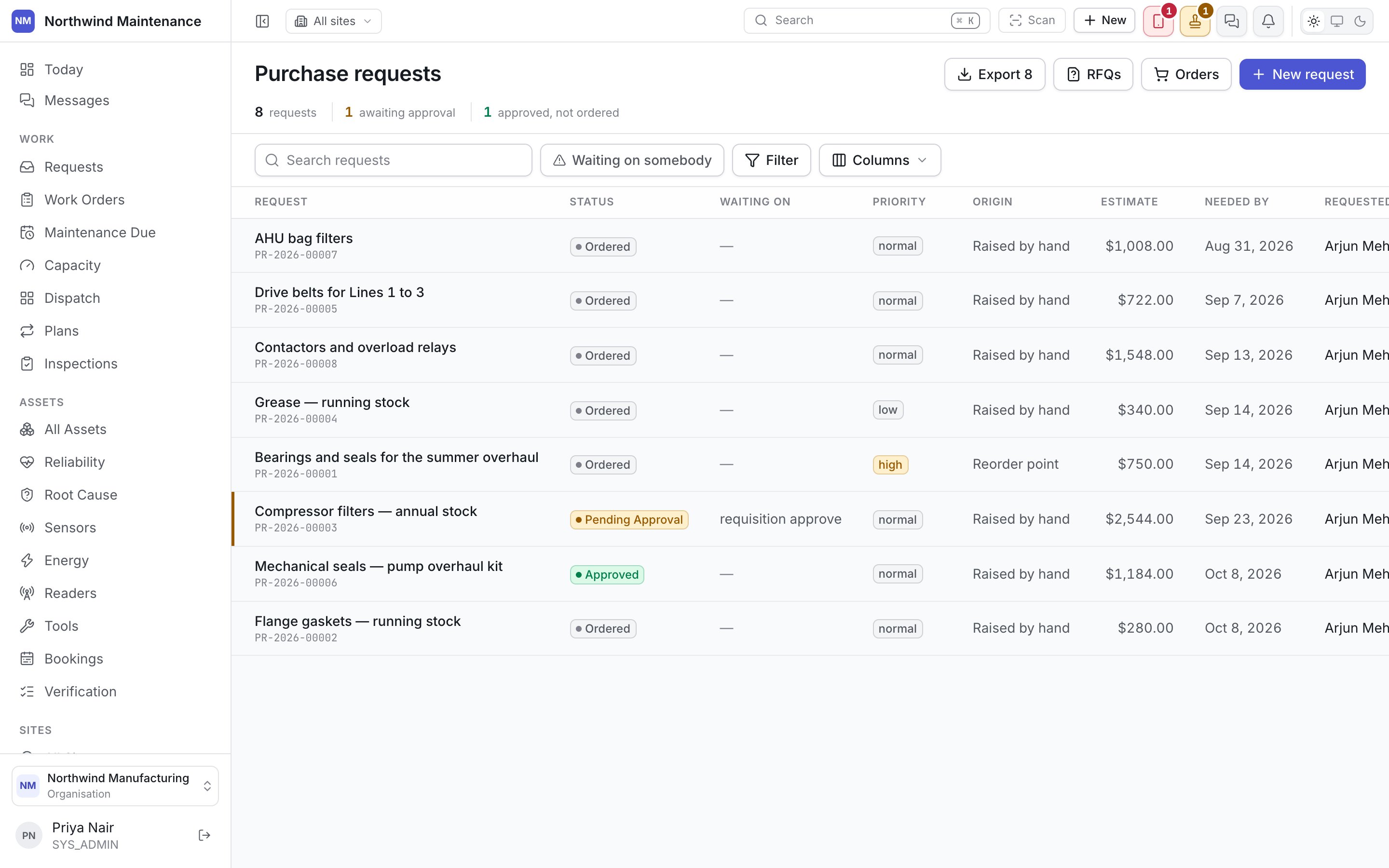
Where a request comes from
Two paths, same form underneath:
An ad hoc request carries no reorder reasoning, so it asks for one — what it is for, and why now.
Request states
Approved does not mean bought. It means somebody with authority agreed the spend may be pursued.
The buying decision — which vendor, at what price — is what the RFQ and purchase order record next.
The approval chain
Every request routes through an approval chain built on the product’s one general-purpose engine — see workflows for how a chain is put together, and Approvals for where the actual decision gets made. Chains are set per organisation, typically by amount, category or site, so a request for a filter and a request for a compressor need not travel the same path. The request’s detail view shows the chain itself, not just the current step:- Every approver in order, and whether their step is pending, approved or rejected.
- Who actually signed off, and when — not just who was assigned to.
- Any comment an approver left, particularly on a rejection or a return for information.
What it’s for, and what it’s charged against
A request can name what it’s raised for — a work order, an asset, or the maintenance plan that prompted it — so a stalled request reads as “waiting on the pump in Bay 3” rather than just a part number. A request raised from a plan often names neither a job nor an asset yet, since it’s bought before either exists. It can also name a cost centre, and be measured against a budget — see budgets for how a budget is structured and what “available” means against it. That check runs while the request is still being written, so a request against an exhausted budget is visible before it’s approved rather than discovered at month end.Columns
Raising a request
New on this screen, or + Create → Purchase request from anywhere. The minimum is what is wanted, a quantity, and why. Reorder-sourced requests arrive with the part, quantity and reasoning already filled in.Reorder recommendations
What is running low, and why the system thinks so.
Requests for quotation
What happens once a request is approved.
Budgets
What a cost centre has available, and how a request is measured against it.