

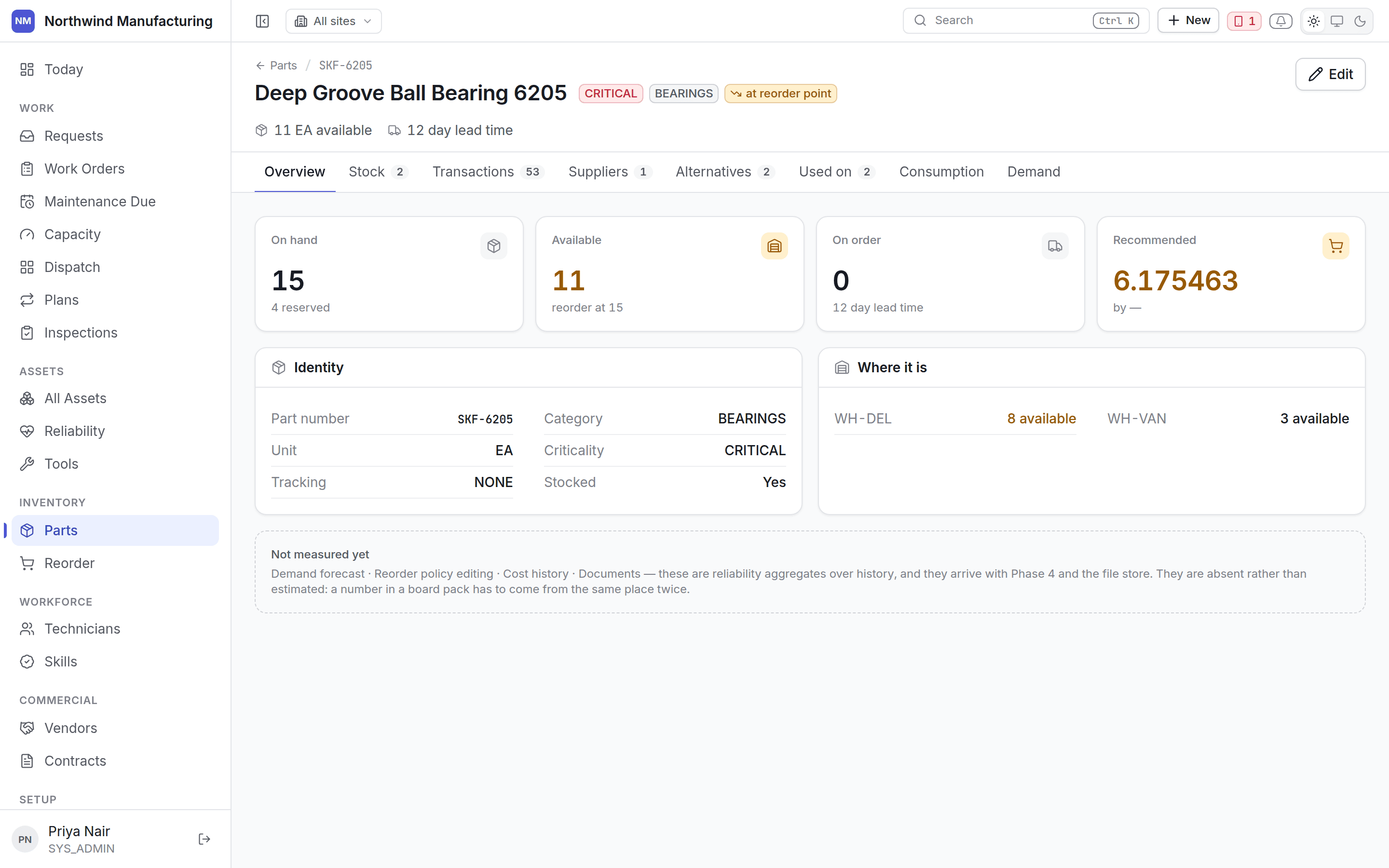
Tabs
Overview
Overview
Part number, description, category, unit of measure, standard cost, and the totals across all
stores — with a larger cover photo alongside, pulled from the first file attached under
Files.
Stock
Stock
Where this part actually is — quantity per store, per bin, with each store’s own reorder point.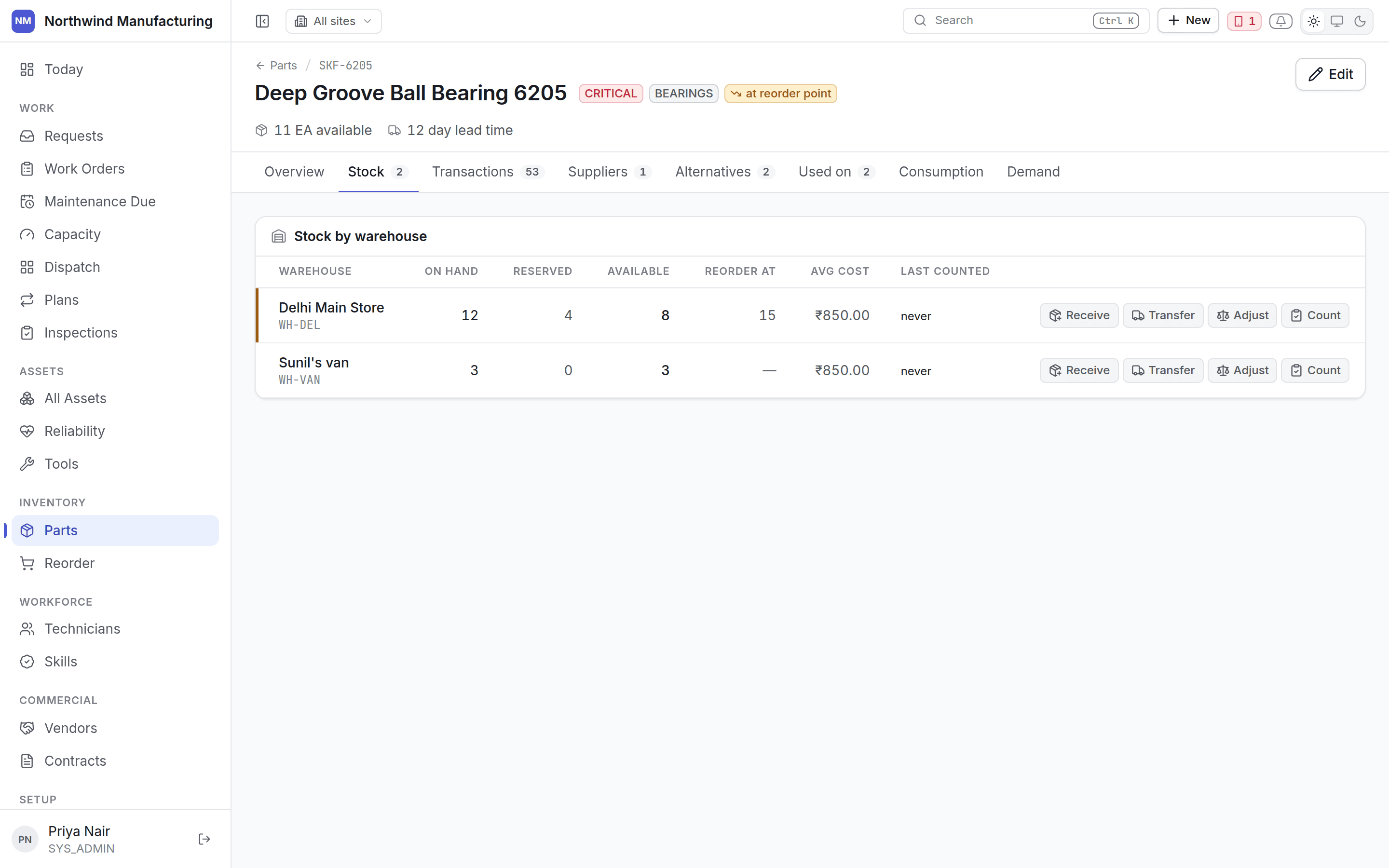
Transactions
Transactions
The ledger: every receipt, issue, return, transfer and adjustment, with date, quantity, job and
who did it.Every stock number in the product is derived from this ledger. If a figure looks wrong, this is
where the truth is.
Suppliers
Suppliers
Who sells it, at what price, with what lead time. Lead time is what makes a reorder
recommendation actionable — a part that takes six weeks needs reordering long before one that
arrives tomorrow.
Alternatives
Alternatives
Parts that will do instead. When stock is short, readiness and the reorder list can consider
substitutes rather than declaring a job blocked.
Used on
Used on
Which assets take this part — the reverse of an asset’s bill of materials. Useful before
discontinuing something: this tab says what would be orphaned.
Consumption
Consumption
How much of it you actually get through, computed from the ledger rather than read from a
summary. A part with no summary is not a part with no history.Consumption drives the demand rate the reorder list works from.
Files
Files
Photos, manuals, certificates — whatever documents the part. The first file attached here is
what shows as the cover photo, on this screen and as the thumbnail on the part
catalogue.