

Nothing here is tax advice. The product holds the rates, lives and rules you give it; confirm them
against the Act and notifications in force with your accountant before a book runs on them.
The financial year and currency
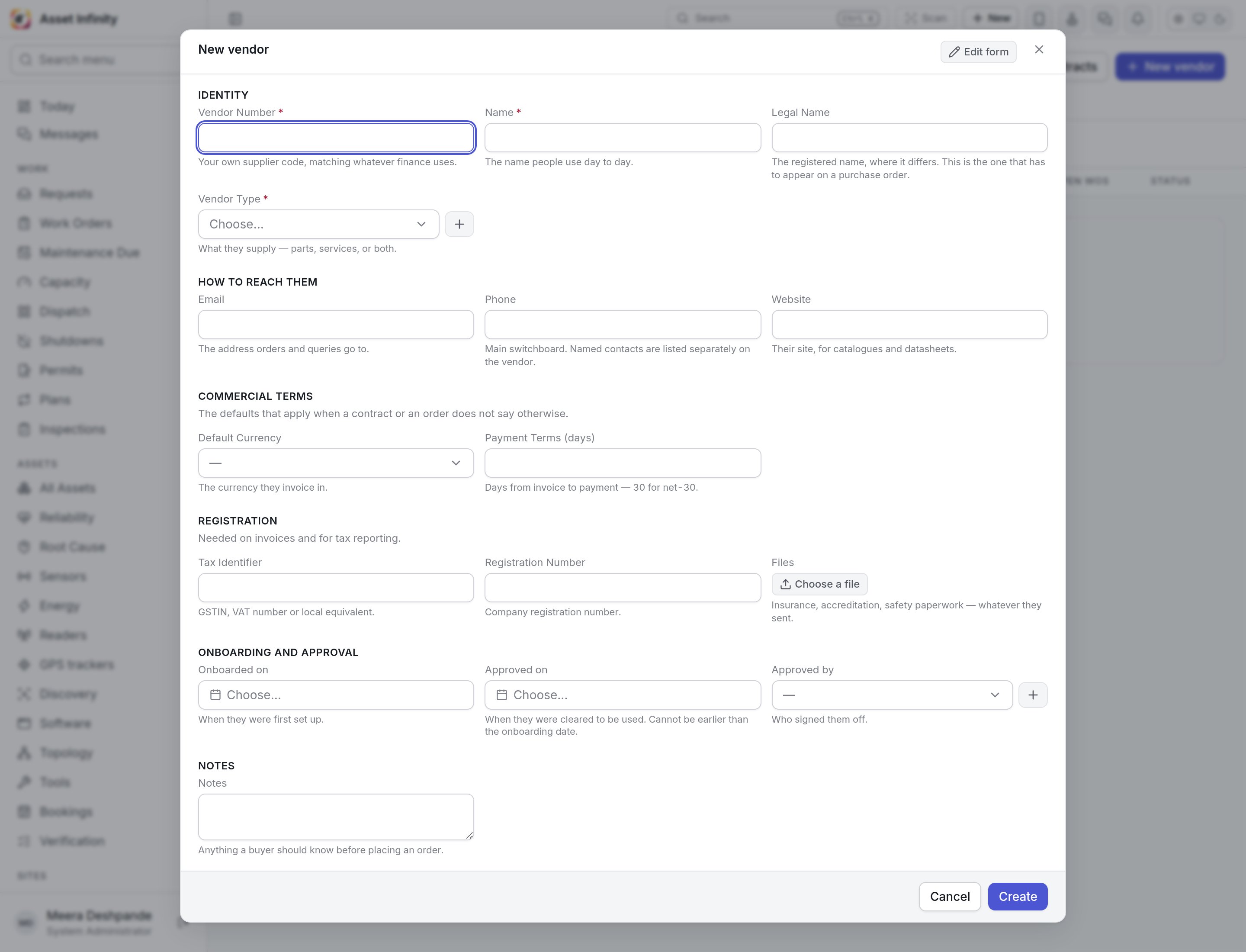
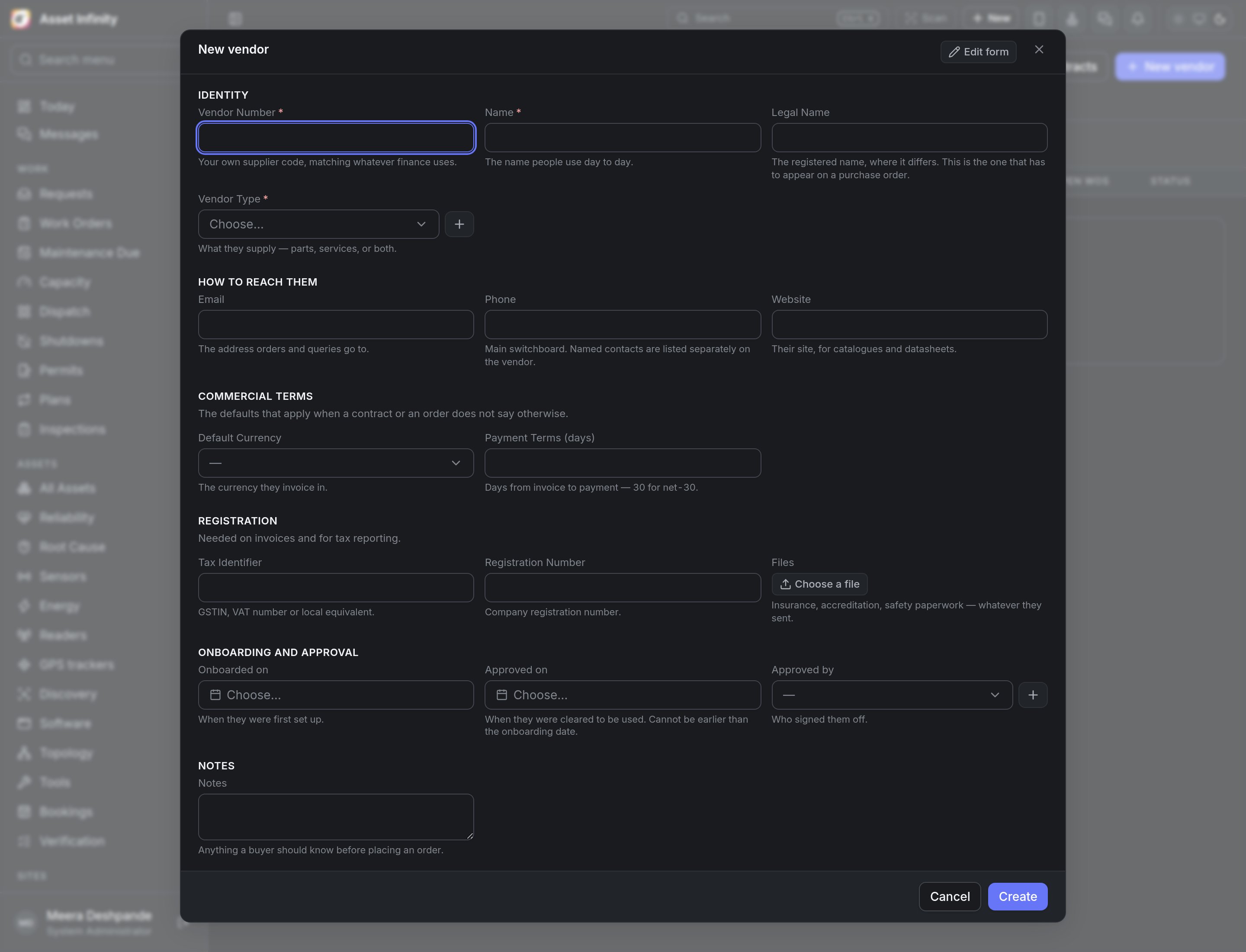
An Indian company’s financial year runs 1 April to 31 March. Set it up as a fiscal calendar starting in April — the India depreciation pack does this for you, as Financial year (April–March), monthly. Budgets, capex plans and depreciation books are all counted in that calendar. Amounts are shown in rupees (₹) when the company’s currency is INR. Lakh and crore grouping — ₹3,12,12,014.48 rather than ₹31,212,014.48 — follows each person’s language and region setting in their own profile, so ask your people to choose an Indian English region there.GST registration numbers
GST on purchase orders and invoices
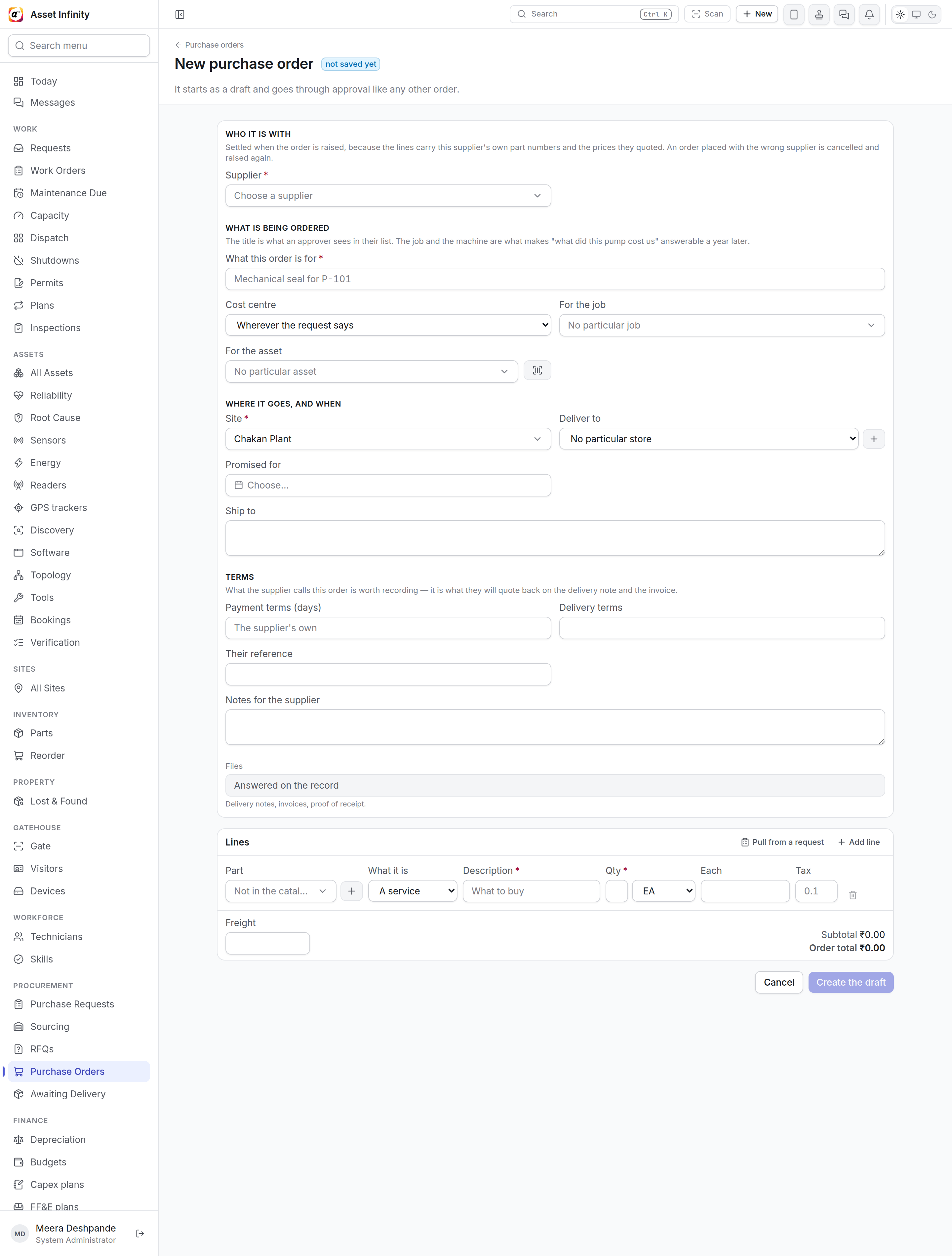
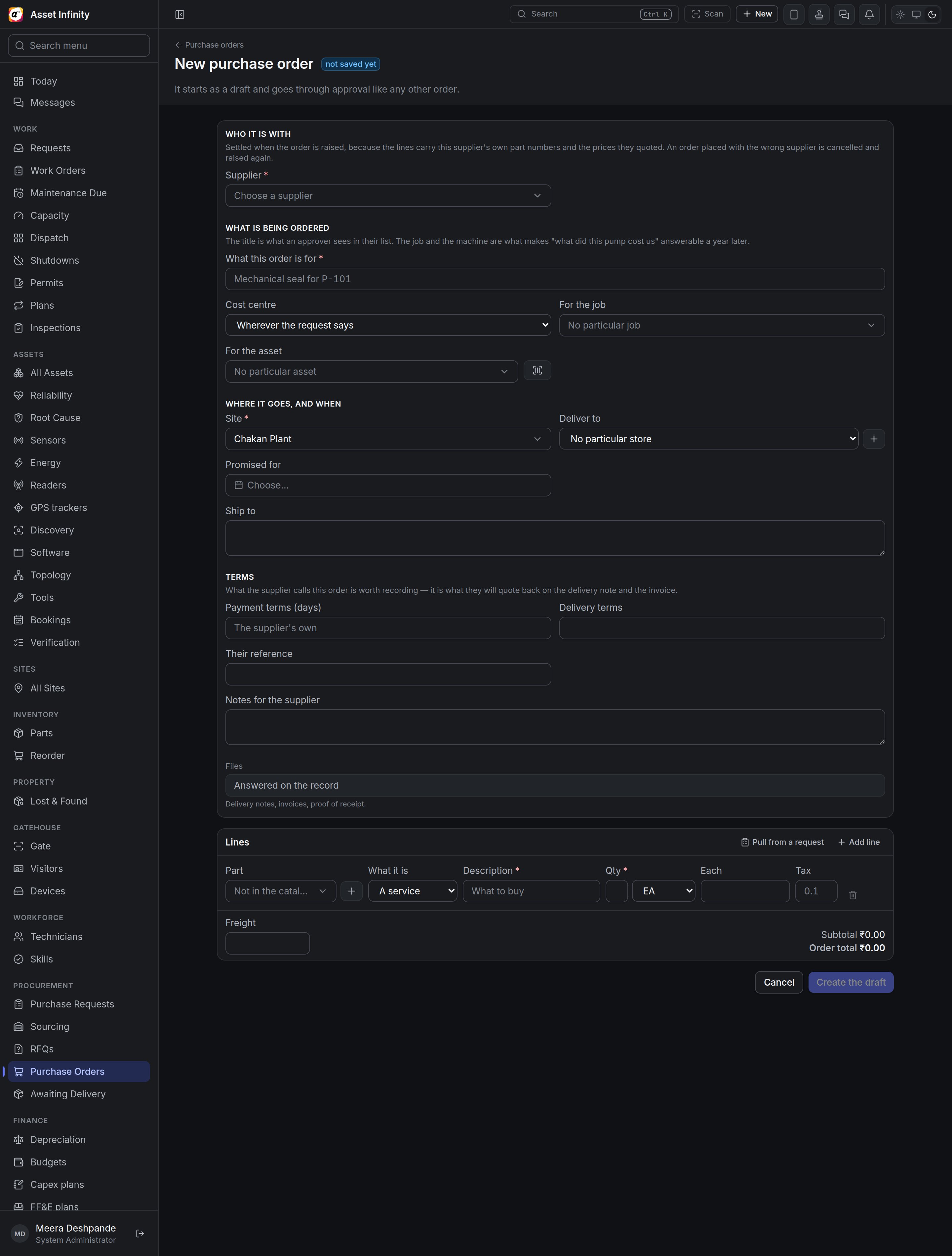
A line carries one combined rate. The product does not split it into CGST, SGST/UTGST and IGST, and has no HSN or SAC code fields — record the combined rate here and keep the component split, place of supply and e-invoicing in your accounting system. If you need the HSN or SAC on the record, your administrator can add a custom field to parts or order lines in Form Studio.
GST and budgets
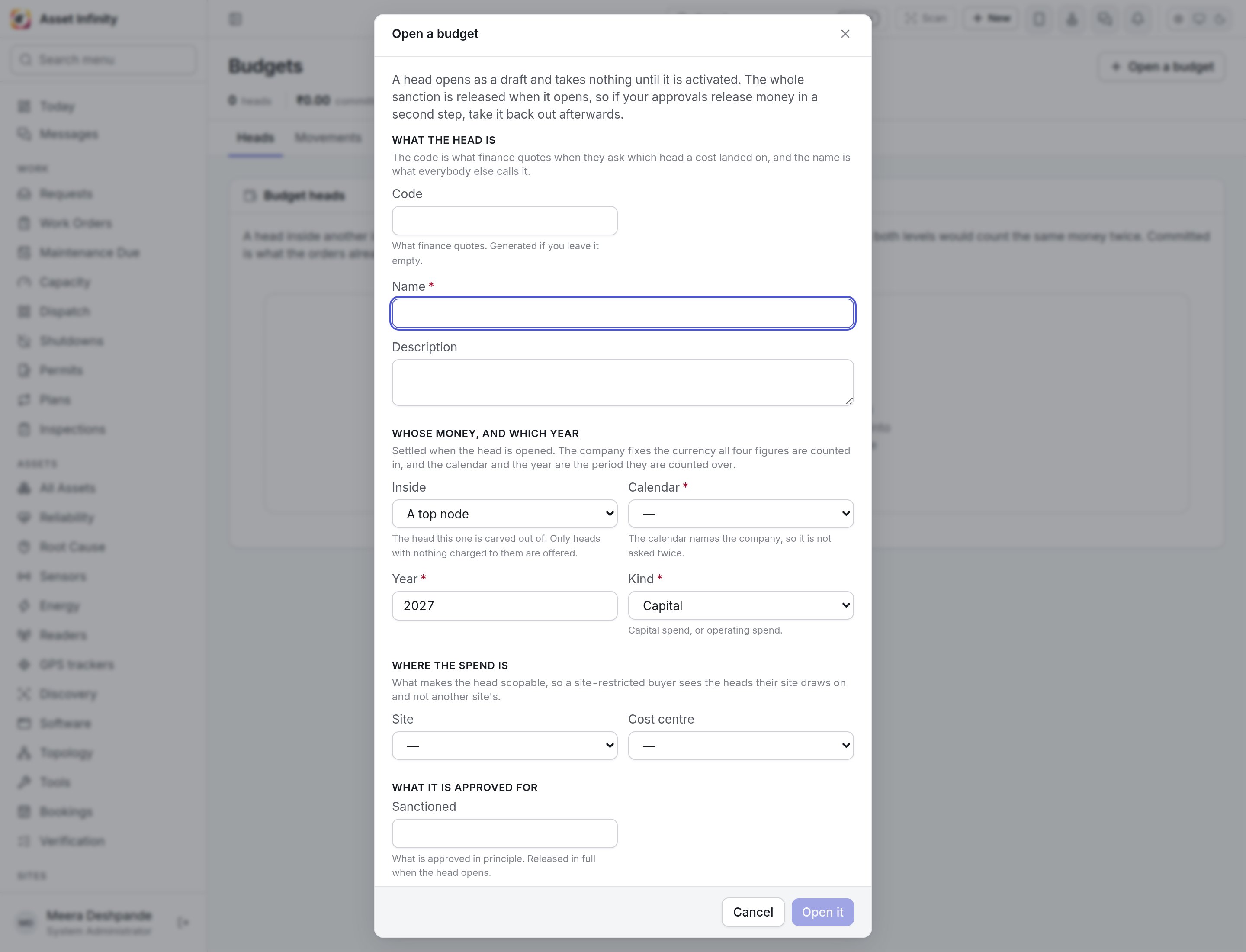
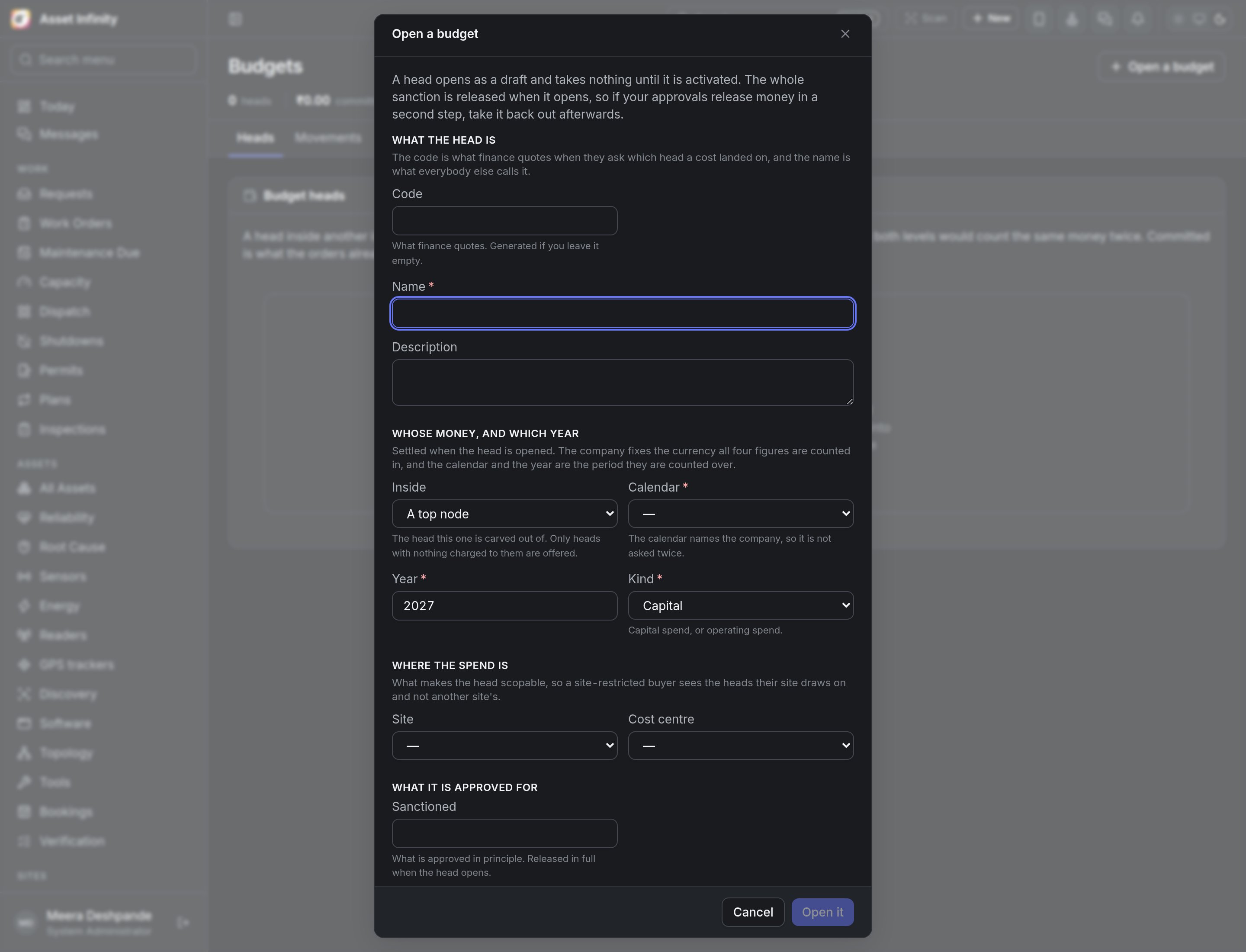
When you open a budget head, Counted decides how documents consume it:
Net takes off the whole tax on the document; a head cannot treat part of an order’s GST as recoverable and part not.
Depreciation: two statutes, two books
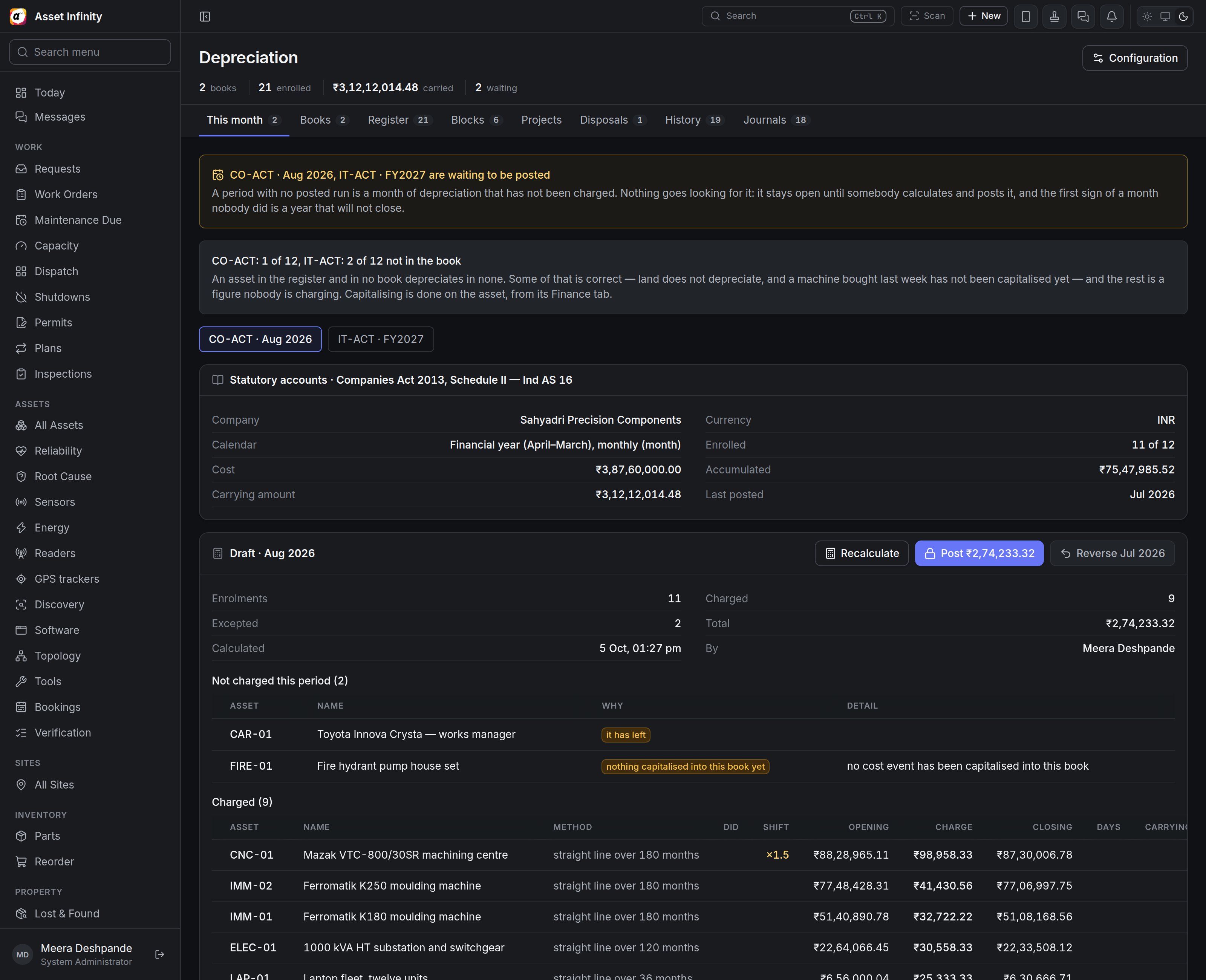
An Indian company depreciates the same fleet twice: under the Companies Act 2013 for its accounts, and under the Income-tax Act 1961 for its return. The Depreciation screen keeps both books at once, and they are expected to disagree.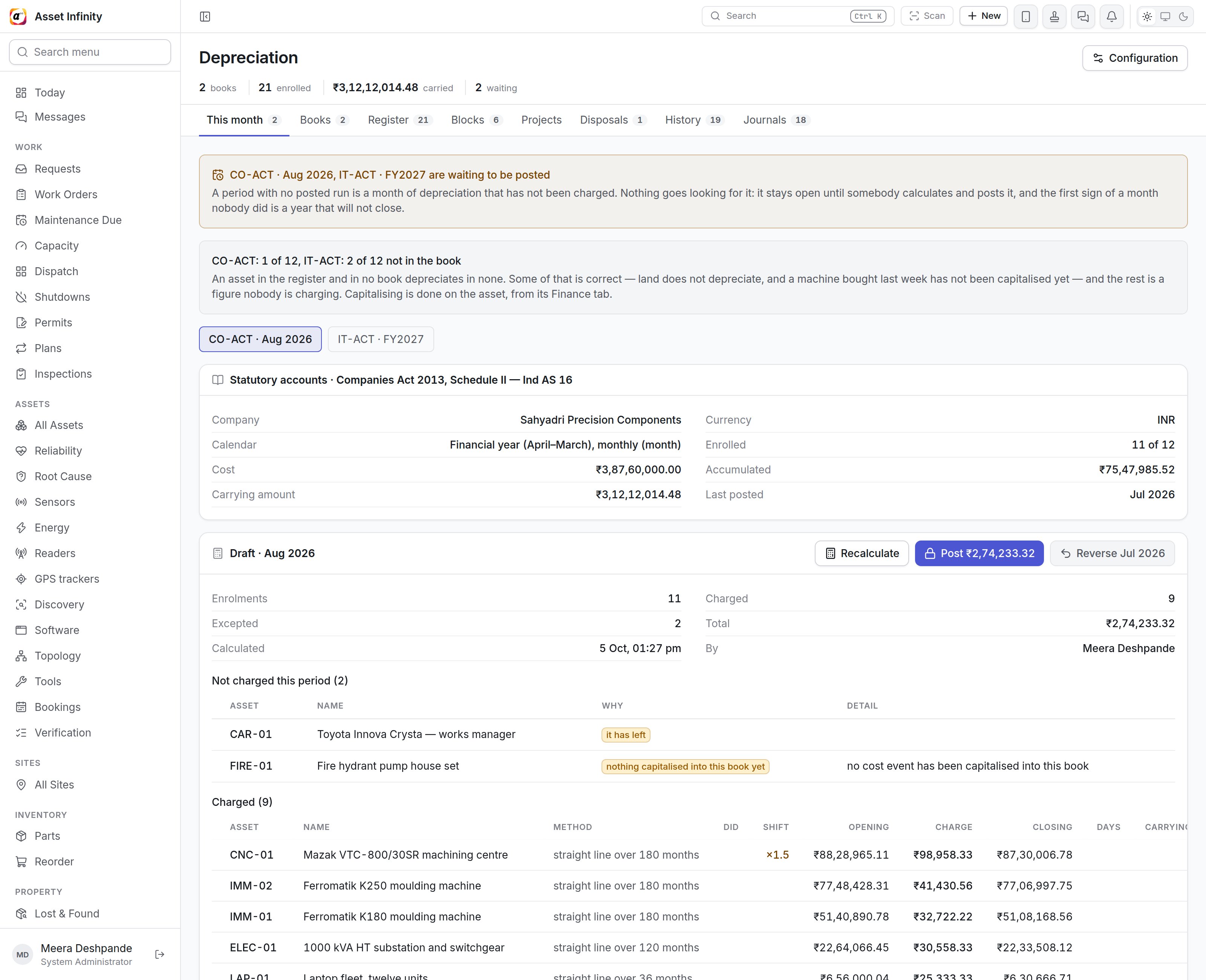
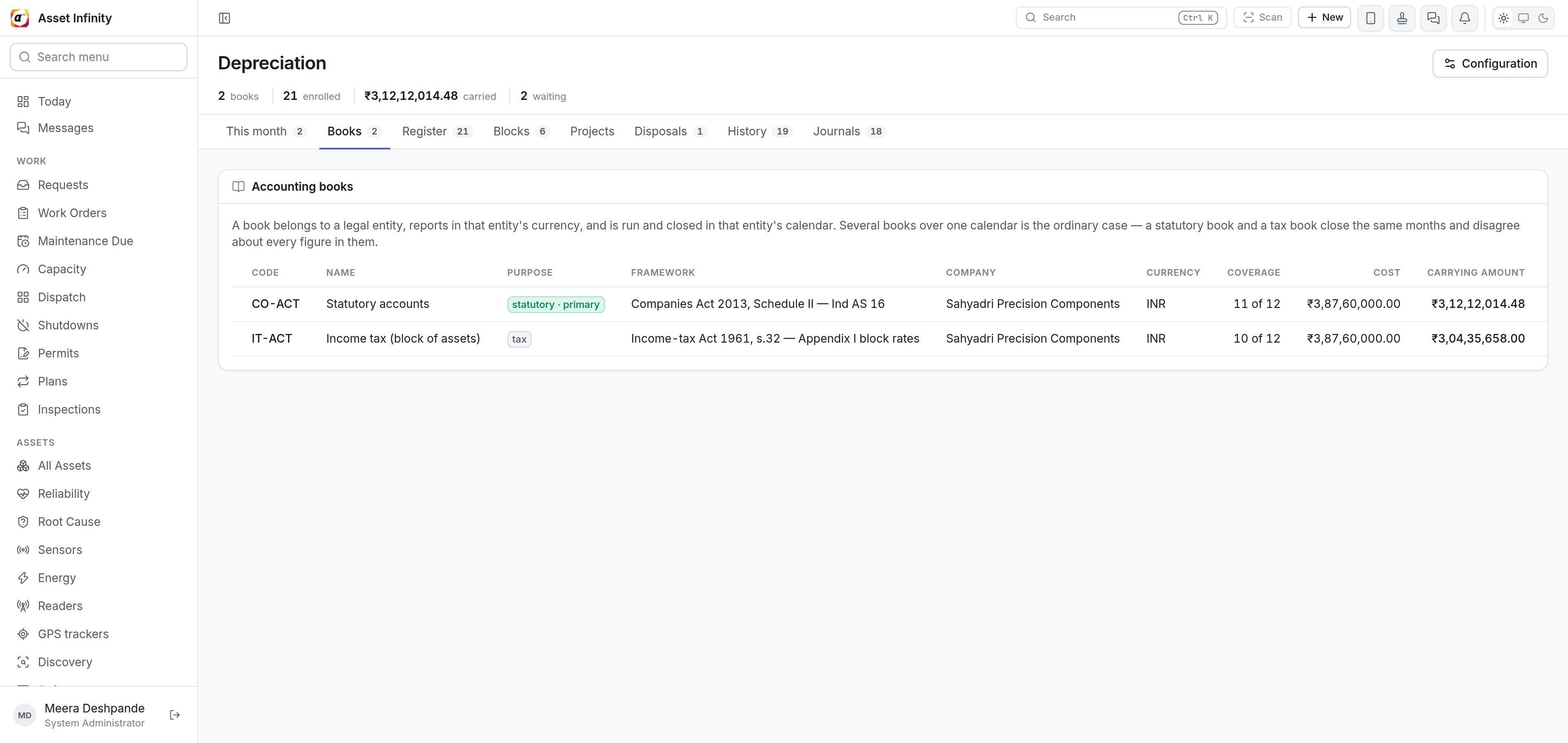
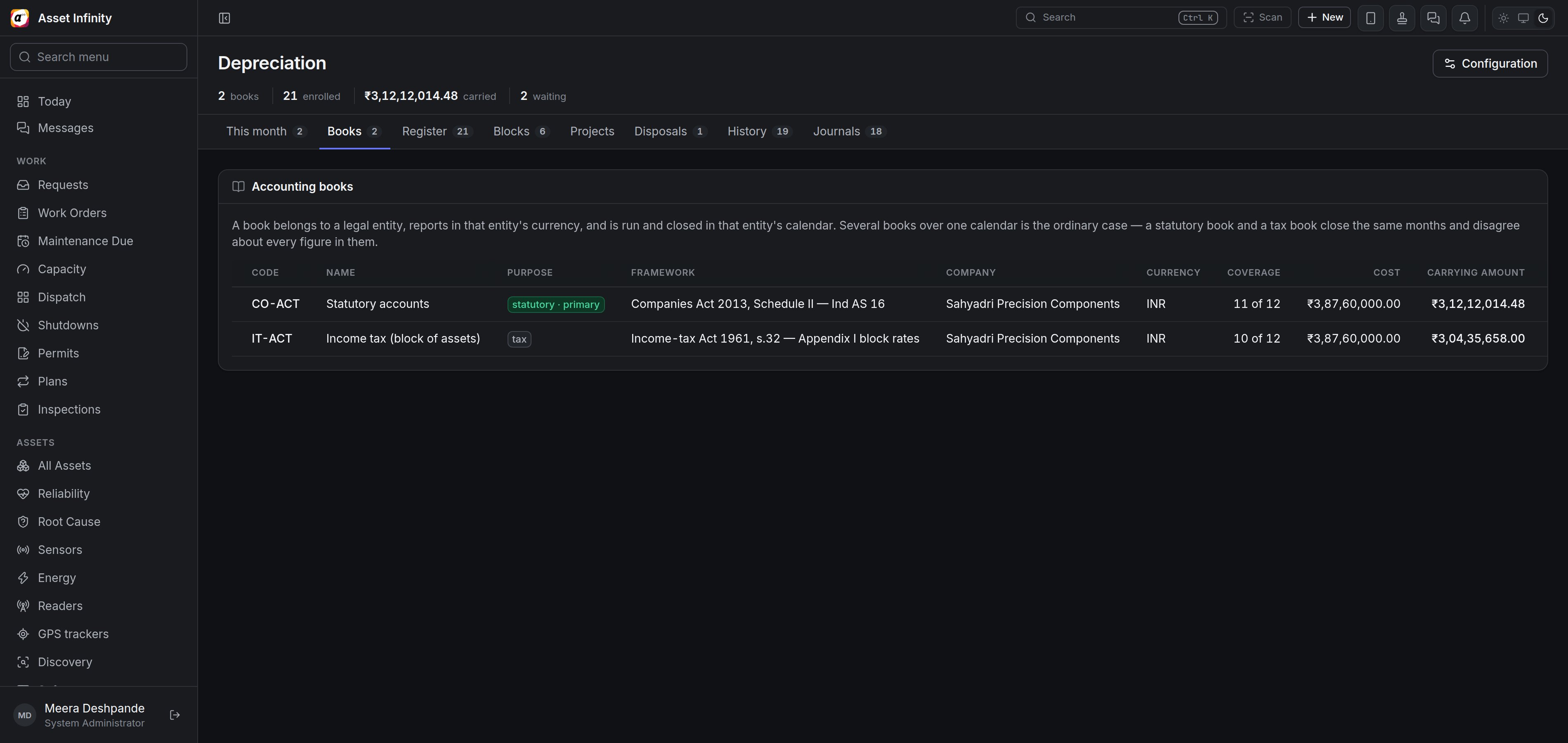
Setting it up: the India country pack
Under depreciation settings, a company with no book is offered India — Companies Act and Income-tax Act. Installing it creates in one step:
After installing, two things remain before either book can post a journal:
- Add your own depreciation expense and accumulated depreciation ledger accounts and map them to the classes.
- Confirm the Schedule II lives against your own technical assessment (the Act allows a different life where you can justify it) and the 5% residual, which is a cap rather than a requirement.
The statutory book
Runs monthly like any per-asset book. In the run, a plant asset that worked more than a single shift shows the factor in the Shift column — for example ×1.5, with the hours it ran against the site’s normal hours. The multi-shift calculation reads the asset’s running-hours meter, so plant that should get the uplift needs one.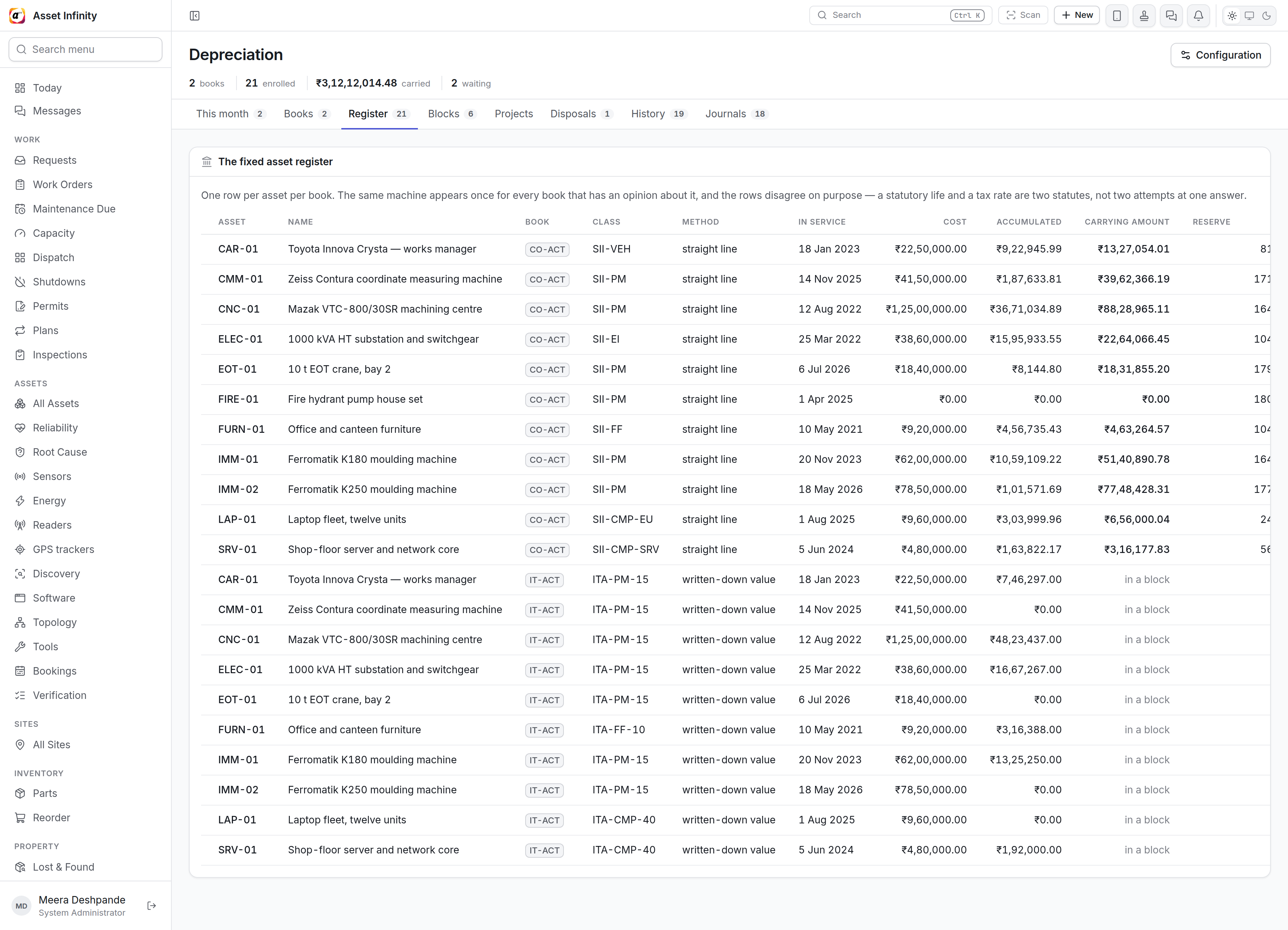
The income-tax book: blocks of assets
The tax book is computed once a year, on the Blocks tab: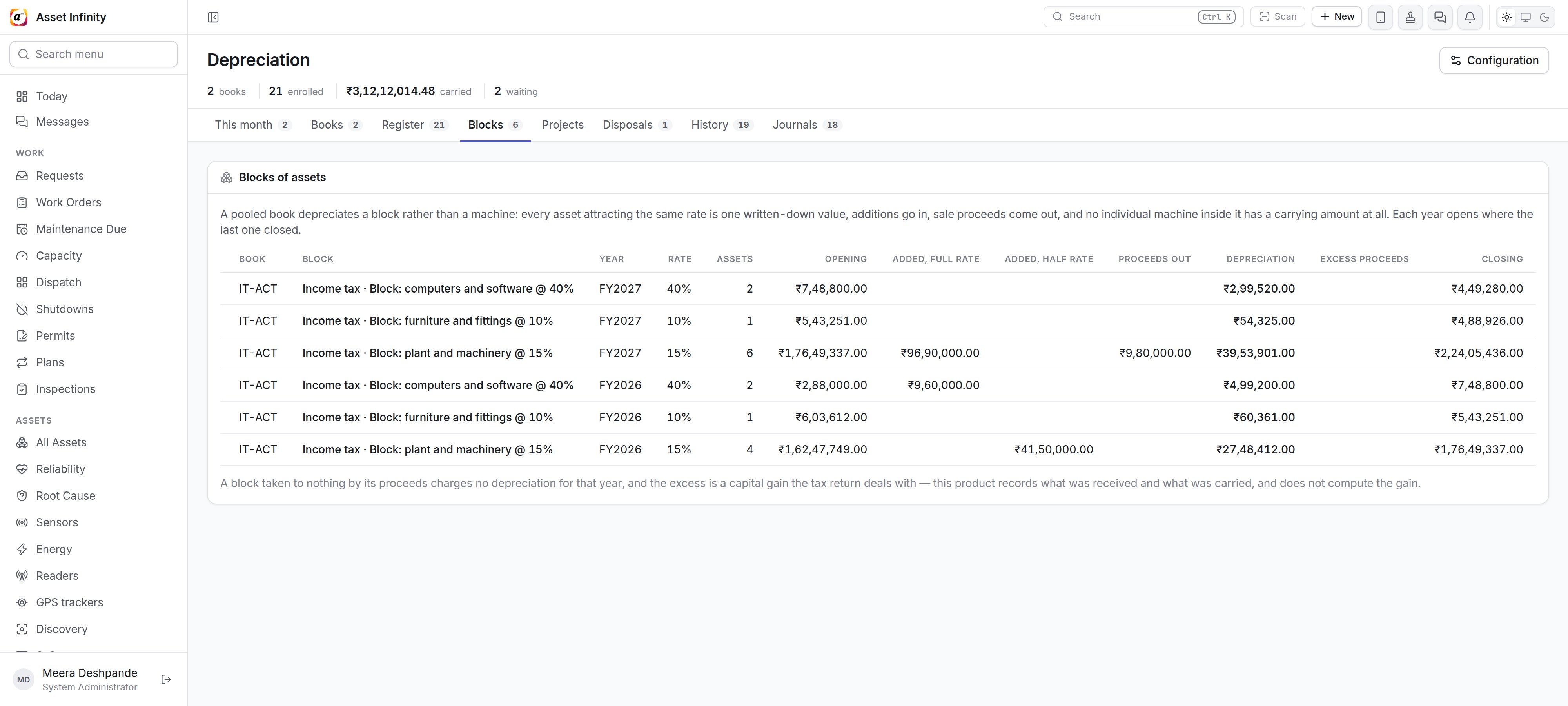
The year in progress is a draft until you post it at year end.
Selling an asset
A sale is recorded once, with Dispose on the asset’s Finance tab, and treated differently in each book: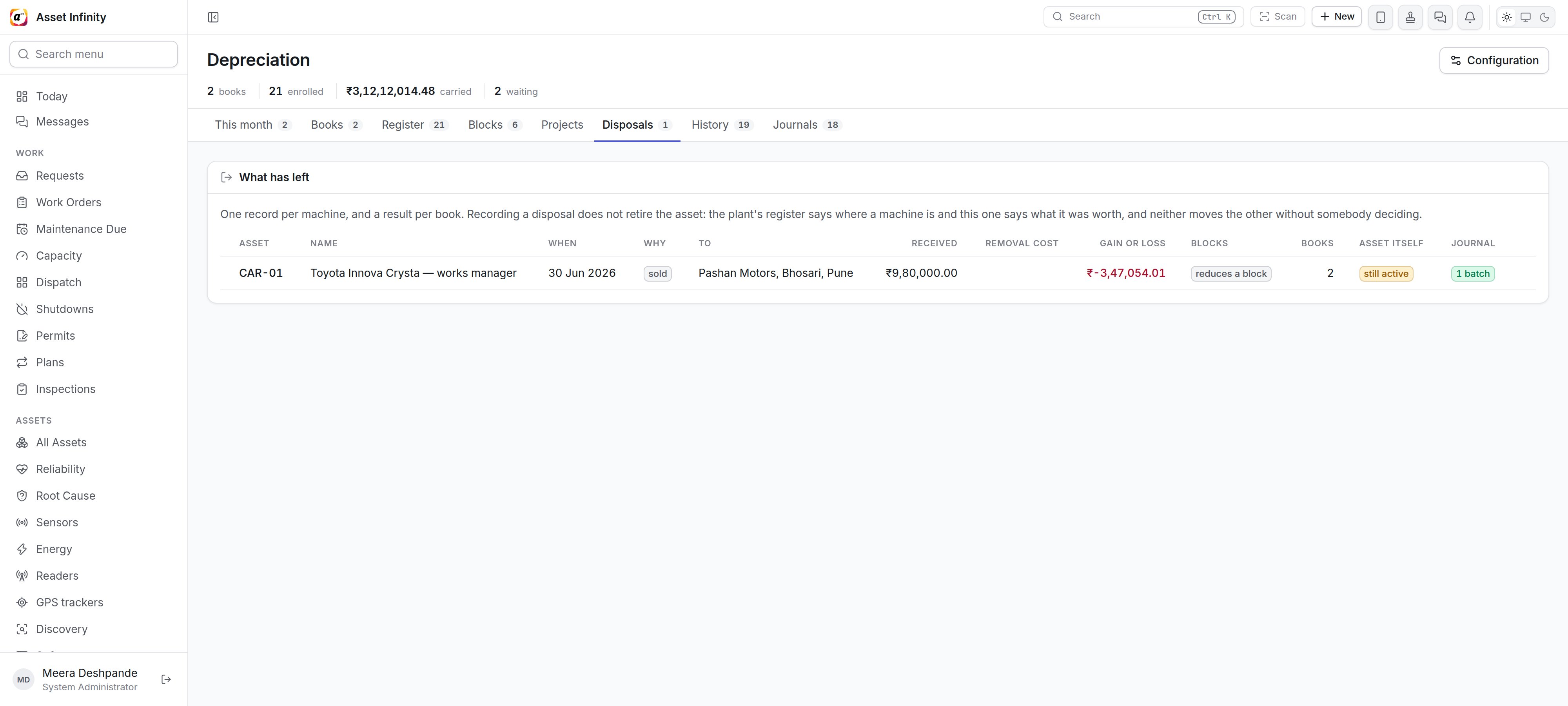
Depreciation
The monthly run, register, blocks, projects and journals.
Purchase orders
Lines, tax and three-way matching.