

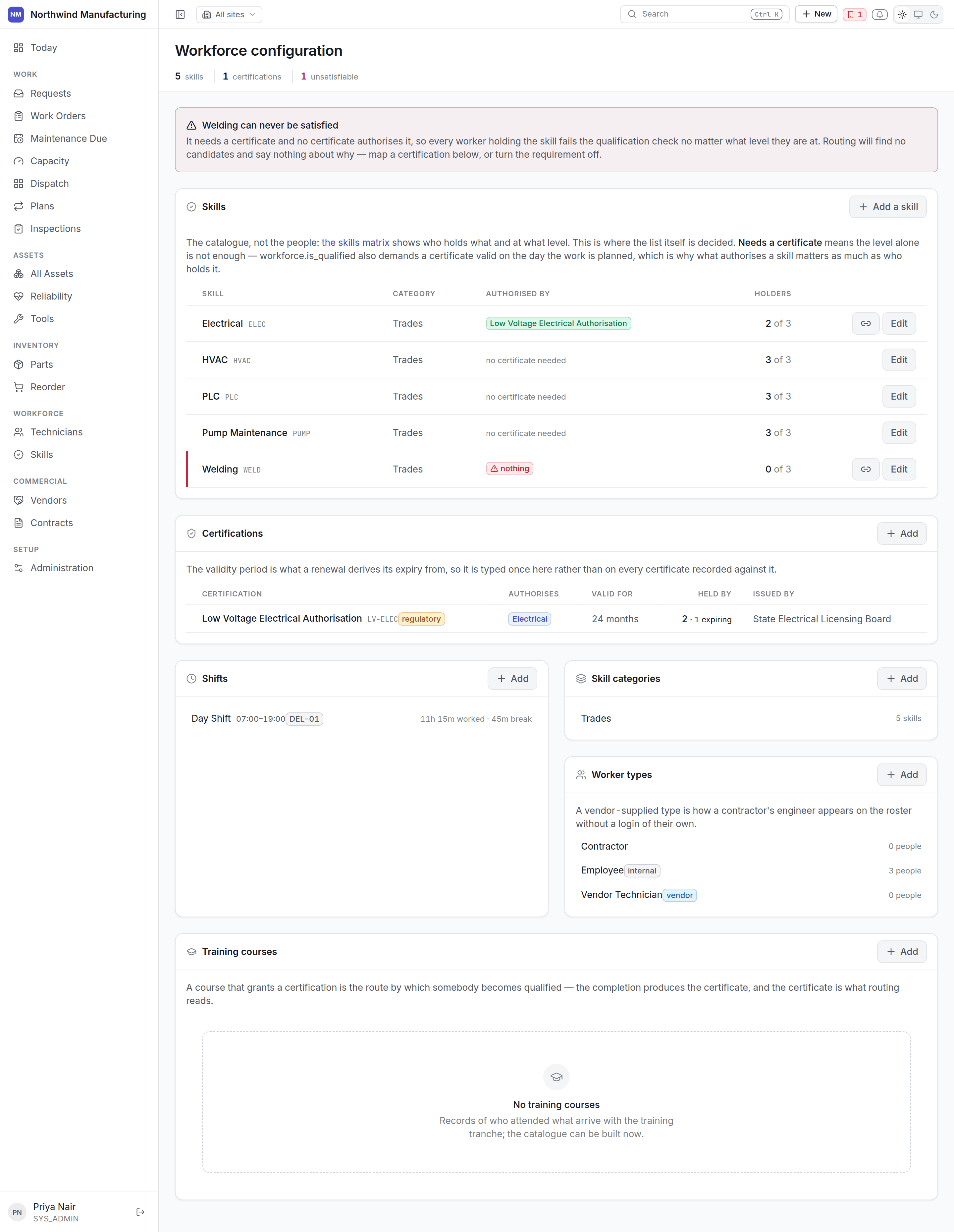
Skills
What a person can do. Skills are used by:- Maintenance plans, to say what a round requires.
- Routing, to rank who could do a job.
- Dispatch, to warn before you send somebody who cannot do it.
- The skills matrix, to find where you have only one person.
Skill categories
Group skills — mechanical, electrical, instrumentation, welding, civil — so a long list stays navigable.Certifications
Formal tickets with expiry dates. The difference from a skill matters: a skill is a capability, a certification is an authorisation that stops being valid on a date. An expired certification stops an assignment rather than warning about it, and expiry raises a notification ahead of time.Certification types
The kinds you track — pressure systems, electrical isolation, confined space, working at height — each with its usual validity period, so entering somebody’s certificate fills the expiry in.Shift definitions
The patterns your plant works: a day shift, a night shift, a rotating pattern. Shifts decide who is available when, which is what capacity weighs and what dispatch reads.Availability comes from shifts, working windows and leave together, with one place owning the
precedence between them. Get the shift definitions right and everything downstream follows.