
A notification needs two things
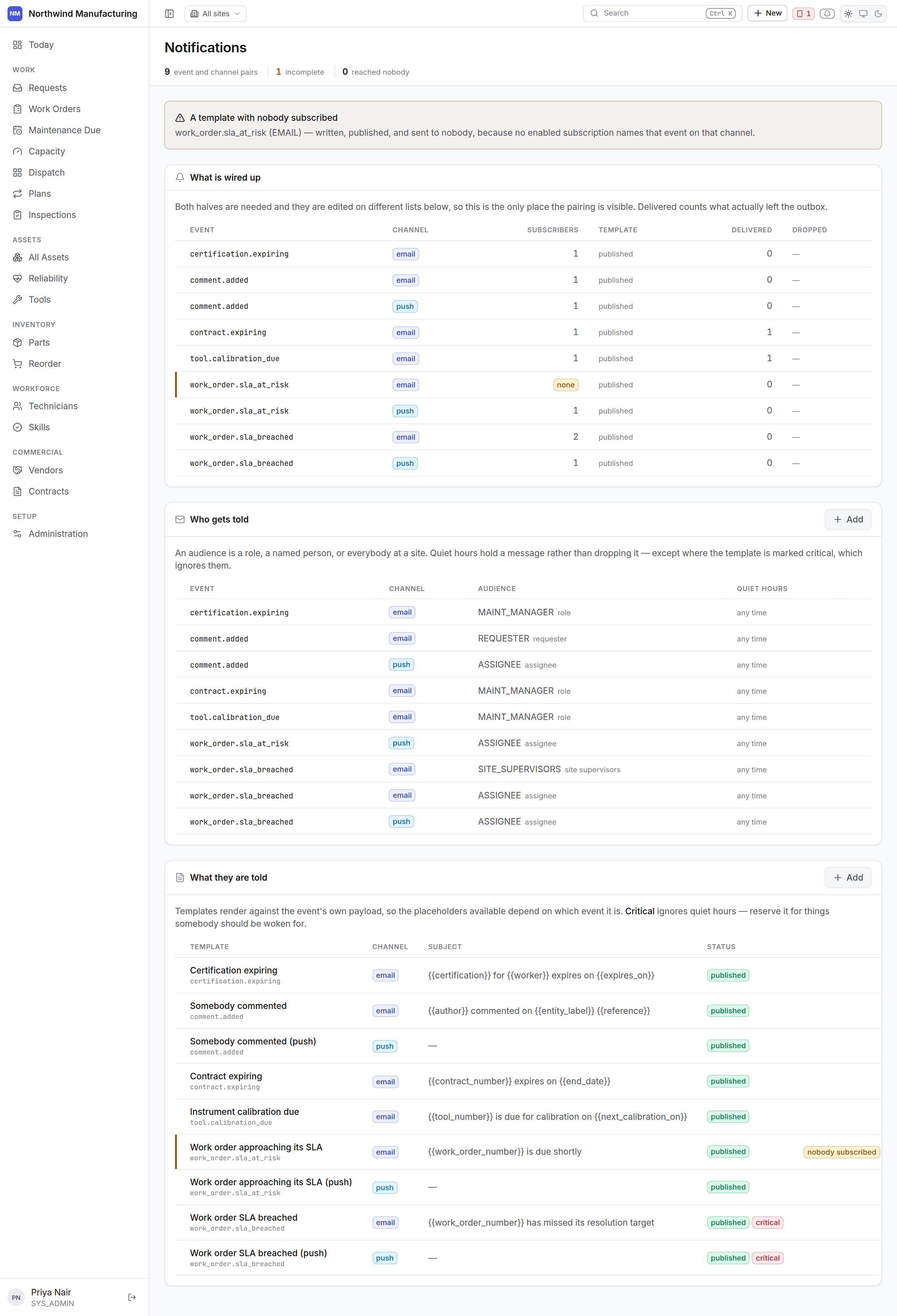
Both, or nothing is sent:- A subscription — somebody is signed up to this event on this channel.
- A published template — for that event, on that channel.
The third failure nothing else can see
An audience that names a role nobody holds. The subscription is right, the template is right, and the fan-out drops the message with nothing to send it to. So this screen judges each pairing on what was actually delivered rather than on what the rows imply. If a pairing shows subscribers and templates but no deliveries, that is what has happened.The events
The report email names whose access answered it, because a scheduled report runs as its author
rather than as each recipient — without that sentence, two people comparing their copies would read
the difference as a fault in the figures.
Plan generation failing used to fail silently. It no longer does: the event is rate-limited to once
per plan per day, so a stuck plan announces itself once rather than by the hour, and it ships with a
default subscription to the Maintenance Manager role, so somebody hears about it without having
to set anything up first.
Channels
Email and push. Push reaches the field app on a handset; email reaches an inbox. Some events are worth both — an SLA breach — and some only one.Audiences
Who gets told, expressed as a role or a relationship rather than a list of names:- The assignee — whoever is on the job now, which stays right when it is reassigned.
- A role — every planner, every supervisor.
- The requester — whoever reported it.